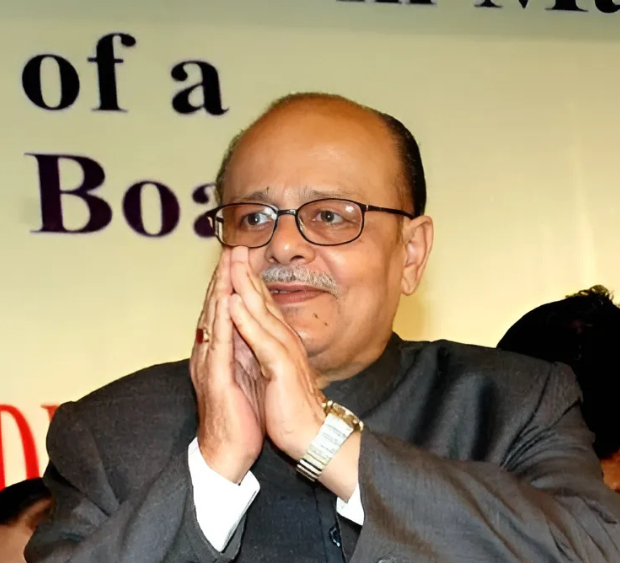
About

Arjun Singh: A Legacy of Leadership and Social Justice

Arjun Singh (5 November 1930 – 4 March 2011) was a senior leader of the Indian National Congress and twice served as the Chief Minister of Madhya Pradesh. He played a pivotal role in Indian politics for over five decades and was known for his dedication to education and social justice. As Union Minister of Human Resource Development under Prime Ministers P. V. Narasimha Rao and Dr. Manmohan Singh, he championed the implementation of 27% reservation for Other Backward Classes (OBCs) in premier institutions like IITs, IIMs, and AIIMS.

He was instrumental in passing the 93rd Constitutional Amendment and the Central Educational Institutions (Reservation in Admission) Act, 2006. Arjun Singh also held portfolios such as Minister of Commerce, Communications, and was briefly served as the Governor of Punjab. His leadership during Phoolan Devi’s surrender and the Bhopal Gas Tragedy marked major chapters of Madhya Pradesh’s political history. Despite controversies, he remained a strong voice for the marginalized and backward communities.

Arjun Singh: A Legacy of Leadership and Social Justice

Key Contributions of Arjun Singh to Indian Politics and Social Justice

Arjun Singh’s political journey was defined by his unwavering commitment to equity, empowerment, and inclusive development.

icon

Educational Equity Through Reservation

Arjun Singh pioneered the implementation of 27% OBC reservation in top institutions like IITs and AIIMS, ensuring access to quality education for underprivileged communities.

icon

Champion of the Mandal Commission

He firmly supported the Mandal Commission recommendations, reinforcing constitutional rights for backward classes despite intense nationwide protests.

icon

Progressive Leadership in Madhya Pradesh

As Chief Minister, he led major reforms, including the surrender of Phoolan Devi in 1983, and introduced welfare initiatives for rural and slum populations.

JOURNEY
1957
1960
1972
1980
1983
1984
1985
1986
1988
1991
2004
2005
2011
1957
Arjun Singh Entry into Politics

Entry into Politics

Arjun Singh's political career began when he was elected as an Independent Member of the Legislative Assembly (MLA) from Majholi, Madhya Pradesh... Read More

Arjun Singh's political career began when he was elected as an Independent Member of the Legislative Assembly (MLA) from Majholi, Madhya Pradesh. This early win established him as a grassroots leader with strong public support. His entry into politics at a young age laid the foundation for a lifelong commitment to public service, governance, and social change.

Read Less
1960
Arjun Singh - Early Involvement

Joined Indian National Congress

In 1960, Arjun Singh joined the Indian National Congress, India’s most prominent political party at the time. This decision marked a turning point in his career... Read More

In 1960, Arjun Singh joined the Indian National Congress, India’s most prominent political party at the time. This decision marked a turning point in his career, giving him the opportunity to work alongside senior leaders and actively participate in shaping both state and national policies. His alignment with the Congress ideology would influence his progressive stance on social justice and education reform throughout his life.

Read Less
1972
Arjun Singh - Minister of Education, Madhya Pradesh

Minister of Education, Madhya Pradesh

After being elected from Sidhi on a Congress ticket, Arjun Singh was appointed as the Education Minister in the Madhya Pradesh government.... Read More

After being elected from Sidhi on a Congress ticket, Arjun Singh was appointed as the Education Minister in the Madhya Pradesh government. During his tenure, he worked toward expanding access to education in rural areas, enhancing infrastructure, and promoting inclusive educational policies. His focus was to ensure that quality education reached even the most disadvantaged sections of society.

Read Less
1980
Arjun Singh - Chief Minister of Madhya Pradesh (1st Term)

Chief Minister of Madhya Pradesh (1st Term)

In 1980, Arjun Singh was re-elected from Churhat and became the Chief Minister of Madhya Pradesh for the first time... Read More

In 1980, Arjun Singh was re-elected from Churhat and became the Chief Minister of Madhya Pradesh for the first time. His leadership was marked by significant administrative reforms, a focus on rural development, and the promotion of industrial growth. He quickly gained a reputation as a dynamic and people-focused leader who emphasized social development alongside economic progress.

Read Less
1983
Arjun Singh - Oversaw Phoolan Devi’s Surrender

Oversaw Phoolan Devi’s Surrender

One of the most notable events during his first term as Chief Minister was the peaceful surrender of the infamous bandit Phoolan Devi.... Read More

One of the most notable events during his first term as Chief Minister was the peaceful surrender of the infamous bandit Phoolan Devi. This was achieved through a strategic and humane approach, avoiding bloodshed and reinforcing public trust in law and order. Arjun Singh was praised for his ability to handle such a delicate and high-profile situation diplomatically.

Read Less
1984
Arjun Singh - Lok Sabha MP

Leadership During Bhopal Gas Tragedy

As Chief Minister, Arjun Singh faced one of the worst industrial disasters in history — the Bhopal Gas Tragedy.... Read More

As Chief Minister, Arjun Singh faced one of the worst industrial disasters in history — the Bhopal Gas Tragedy. His administration was at the center of emergency response and relief operations. Though the tragedy posed massive challenges, he worked with central agencies to coordinate aid, manage public health responses, and begin long-term rehabilitation for victims.

Read Less
1985
Arjun Singh - From State to National Stage

From State to National Stage

After resigning from the Chief Minister's position, Arjun Singh was appointed Governor of Punjab during a time of political turmoil.... Read More

After resigning from the Chief Minister's position, Arjun Singh was appointed Governor of Punjab during a time of political turmoil. He played a key role in implementing the Rajiv-Longowal Accord, aimed at restoring peace in the state. Later that year, he transitioned into national politics, winning a by-election from South Delhi and becoming a Member of Parliament in the Lok Sabha. This marked his growing influence on national policy-making.

Read Less
1986
Arjun Singh - Union Minister of Communications

Union Minister of Communications

He was appointed as Union Minister of Communications, overseeing India’s growing telecom and postal sectors.... Read More

He was appointed as Union Minister of Communications, overseeing India’s growing telecom and postal sectors. At a time when India was beginning to embrace technology, Arjun Singh’s ministry focused on modernizing services and expanding access, especially in semi-urban and rural areas, to bridge the communication gap across the country.

Read Less
1988
Arjun Singh - Governor of Himachal Pradesh

Chief Minister Again (2nd Term)

In 1988, he returned to state politics, winning from Kharsia and once again becoming Chief Minister of Madhya Pradesh.... Read More
In 1988, he returned to state politics, winning from Kharsia and once again becoming Chief Minister of Madhya Pradesh. His second term was aimed at continuing his development agenda, especially in the sectors of education, health, and rural upliftment. However, the tenure was cut short due to controversies, but his leadership remained widely respected. Read Less
1991
Arjun Singh - HRD Minister in Narasimha Rao’s Cabinet

HRD Minister in Narasimha Rao’s Cabinet

Arjun Singh was elected to the Lok Sabha from Satna and appointed as the Union Minister for Human Resource Development (HRD).... Read More

Arjun Singh was elected to the Lok Sabha from Satna and appointed as the Union Minister for Human Resource Development (HRD). During this tenure, he laid the groundwork for long-term educational reforms, focusing on making quality education accessible to marginalized communities and improving the curriculum and infrastructure of central institutions.

Read Less
2004
Arjun Singh - Passed Away

Return to HRD Ministry Under Manmohan Singh

After a brief period out of Parliament, Arjun Singh was appointed once again as Union HRD Minister in Dr. Manmohan Singh’s cabinet.... Read More

After a brief period out of Parliament, Arjun Singh was appointed once again as Union HRD Minister in Dr. Manmohan Singh’s cabinet. He used this opportunity to push forward significant reforms in higher education, including expansion of institutions, improved teacher training programs, and efforts to enhance inclusivity in elite institutes.

Read Less
2005
Arjun Singh - Championing Social Justice Through Education

Championing Social Justice Through Education

Arjun Singh led the 93rd Constitutional Amendment and played a pivotal role in passing the Central Educational Institutions (Reservation in Admission) Act, 2006.... Read More

Arjun Singh led the 93rd Constitutional Amendment and played a pivotal role in passing the Central Educational Institutions (Reservation in Admission) Act, 2006. This legislation introduced 27% reservation for Other Backward Classes (OBCs) in central institutions such as IITs, IIMs, and AIIMS. His actions were instrumental in making India’s top educational institutions more representative and accessible to disadvantaged communities, despite facing strong protests and legal challenges.

Read Less
2011
Arjun Singh -  Passing of a Stalwart

Passing of a Stalwart

Arjun Singh passed away on March 4, 2011, while serving as a Member of the Rajya Sabha. His death marked the end of a long and impactful political journey that left a deep imprint on Indian governance.... Read More

Arjun Singh passed away on March 4, 2011, while serving as a Member of the Rajya Sabha. His death marked the end of a long and impactful political journey that left a deep imprint on Indian governance, education, and social equity. Remembered as a seasoned administrator, reformer, and champion for the underprivileged, his legacy continues to influence policy discourse in India.

Read Less